


Resistance training (RT) is widely prescribed across clinical, fitness, and athletic settings and is generally considered safe when appropriately programmed. However, no comprehensive, peer-reviewed consensus currently exists identifying specific medical conditions that should be considered precautions or contraindications prior to RT participation. Methods: A 3-round modified Delphi survey was conducted with health care and fitness experts (n = 15) possessing > 10 years of professional experience in RT prescription and instruction. Eighty-two medical conditions and considerations were identified through a systematic literature and textbook review and evaluated across 3 survey rounds. Consensus thresholds were predefined (> 70% agreement), and a strength-of-agreement grading scale (strong, moderate, weak, or both) was applied to classify final items. Results: Experts reached full consensus (100% agreement) on a final list of 27 medical conditions and considerations. These included musculoskeletal (n = 11), cardiovascular (n = 2), integumentary/connective tissue (n = 3), nervous system or psychological (n = 3), and miscellaneous conditions (n = 8). Strong consensus supported 8 precautions and 2 contraindications, while several conditions were classified as context dependent (both precaution and contraindication), reflecting variability in clinical presentation and professional judgement. Conclusion: This modified Delphi study provides the first comprehensive, expert consensus–based list of RT precautions and contraindications. The findings offer practical guidance for health care and fitness professionals when screening individuals prior to RT participation and highlight the need for improved adverse-event reporting and future controlled research to refine risk stratification. Practical Implications: The consensus-based list may serve as a clinical decision-support reference to enhance RT safety, inform professional judgment, and guide individualized exercise prescription across diverse populations.
Authors: Scott W. Cheatham, California State University, Dominguez Hills, Carson, California, Brian Sutton, National Academy of Sports Medicine, Gilbert, Arizona, Cherilyn McLester, Kennesaw State University, Department of Exercise Science and Sport Management, Kennesaw, Georgia, and Guillermo Escalante, California State University, San Bernardino, College of Natural Sciences, San Bernardino, California
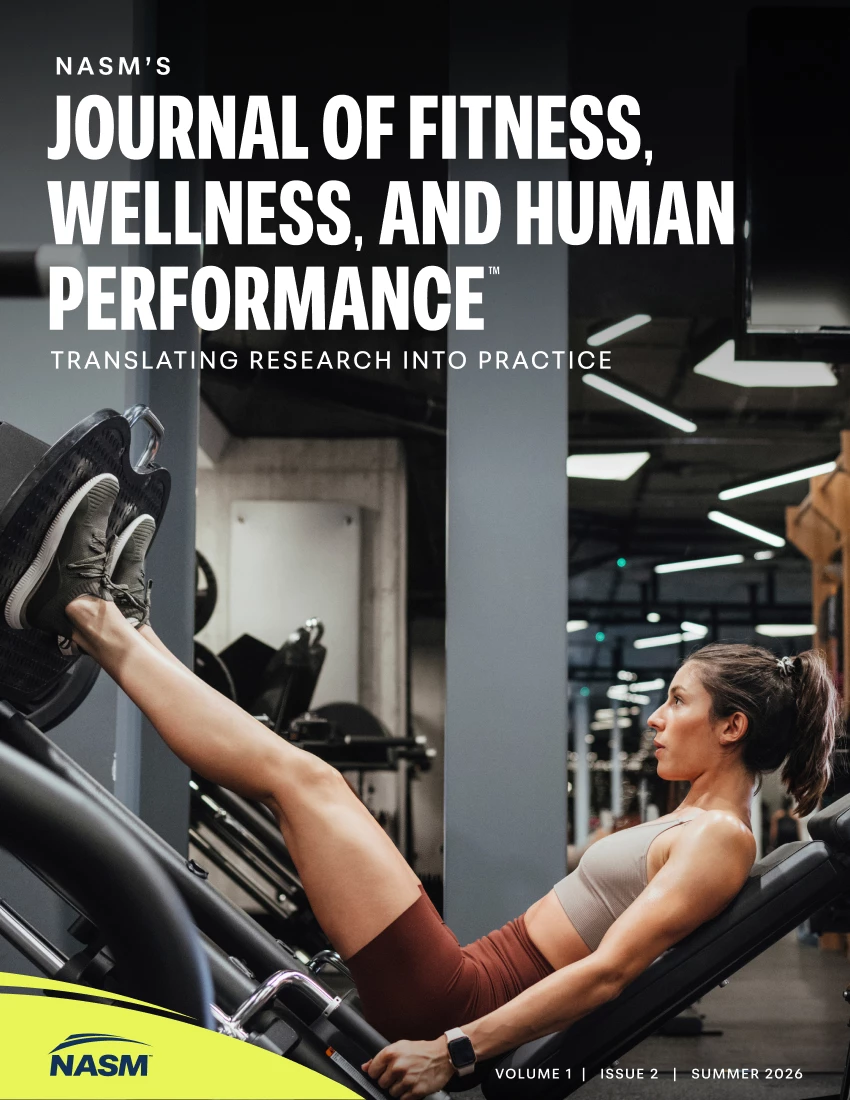
Journal of Fitness, Wellness, and Human Performance, Summer 2026, Vol. 1(2), 1–8
©2026 National Academy of Sports Medicine
https://doi.org/10.70834/JFWHP-26-0001
(If you’d like to earn CEUs, look for this course in the CEU-Library!)